Shifting Player Habits in Loyalty-Driven Poker Tournaments During Off-Peak Hours
Otto Perry · Aug 22, 2026

Shifting Player Habits in Loyalty-Driven Poker Tournaments During Off-Peak Hours
Data from multiple gaming jurisdictions shows that participation patterns in loyalty-driven poker tournaments have changed noticeably during off-peak periods, which typically include weekday mornings, early afternoons, and late-night sessions outside major weekend events. Observers note that players increasingly select these slots to maximize points accumulation through tiered reward systems while facing smaller fields and altered payout structures.
Defining Off-Peak Tournament Windows
Off-peak hours in poker rooms generally run from 10 a.m. to 4 p.m. on weekdays and after midnight on most days, periods when main event volume drops and operators schedule loyalty-focused satellites or freerolls to maintain table occupancy. According to figures released by the Nevada Gaming Control Board, these sessions accounted for 28 percent of total poker tournament entries across monitored properties in the first half of 2026, up from 19 percent recorded two years earlier.
Players often combine these tournaments with daily reward multipliers offered through casino apps, allowing them to complete weekly play requirements without competing against larger weekend crowds. Research conducted by the University of Nevada, Las Vegas Center for Gaming Research indicates that loyalty tier advancement rates during off-peak slots rose 14 percent year-over-year through August 2026, driven by consistent attendance among mid-level reward members seeking steady point gains.
Loyalty Program Mechanics and Player Selection
Modern loyalty structures tie tournament entry to accumulated points or tier status, with off-peak events frequently offering bonus multipliers that accelerate progress toward higher reward levels. Participants report adjusting schedules to attend these sessions because the reduced competition improves cashing frequency even when overall prize pools remain modest compared with peak-time events. Data collected across properties in Atlantic City and the Mississippi Gulf Coast shows that average player buy-in amounts during off-peak loyalty tournaments increased modestly in 2026, while session duration per player lengthened as individuals chased additional point thresholds.
Observed Changes in Participation and Game Selection
Analysts tracking card room traffic have documented a rise in repeat visits from players who previously concentrated activity on weekend main events. In many cases these individuals now split their monthly tournament volume across multiple off-peak loyalty sessions to maintain consistent point accrual rates. Figures from the New Jersey Division of Gaming Enforcement reveal that off-peak poker tournament revenue grew 11 percent in the second quarter of 2026 relative to the same period in 2025, while overall tournament counts remained stable.
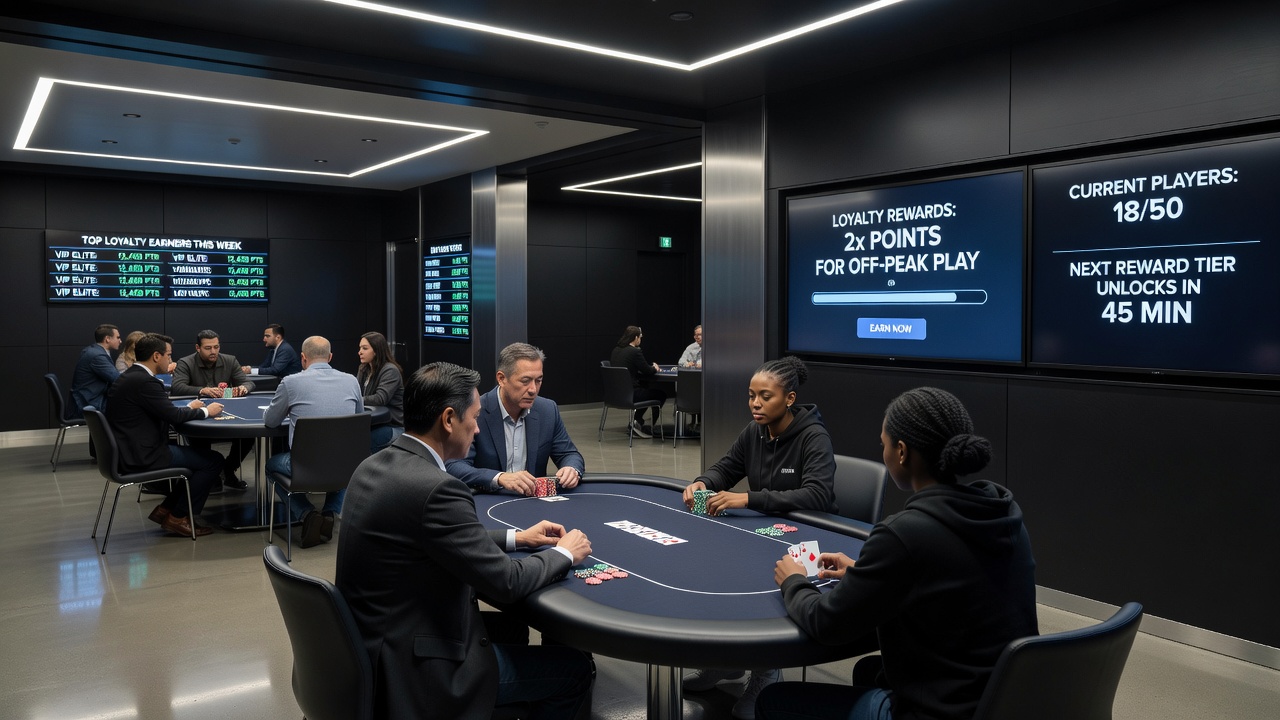
Observers have also recorded shifts in preferred game formats, with no-limit hold'em still dominant but pot-limit Omaha variants gaining ground in loyalty-driven off-peak schedules because they often carry higher point awards per hand. Players who focus on these formats during quieter hours tend to extend their sessions, sometimes completing two or three consecutive tournaments in a single visit to maximize both rewards and table time.
Regional Variations and Operational Adjustments
Properties in different markets have adapted scheduling to match emerging demand patterns. Casinos in Pennsylvania and Indiana introduced mid-week loyalty satellites tied directly to larger weekend events, allowing participants to earn direct entry or additional chips through off-peak play. In Canada, several Ontario gaming facilities reported similar adjustments, with loyalty point bonuses applied specifically to weekday afternoon tournaments to sustain occupancy during historically slower periods.
Operators continue to monitor these trends through internal player tracking systems, noting that the average age of off-peak loyalty tournament participants skews slightly younger than weekend main-event fields. This demographic difference correlates with higher mobile app engagement rates, as younger players more frequently check real-time point balances and upcoming multiplier opportunities before committing to a session.
Conclusion
Available data through August 2026 demonstrates measurable movement toward off-peak loyalty-driven poker tournaments as players adapt their schedules to optimize reward accumulation and playing conditions. Regulatory reports from multiple jurisdictions and academic tracking efforts confirm that these shifts influence both revenue distribution and participant behavior across regulated card rooms, while operators refine scheduling and bonus structures in response to the observed patterns.